Engine review · Wan 3.0

Wan 3.0 review: every mode tested in 31 clips

We ran Wan 3.0 through every mode ClipRush offers and checked all 31 clips frame by frame. It works best when you script it: it spoke dialogue word for word, landed exactly on chosen first and last frames, and kept a face from a reference photo in every run. It slipped on a running dog, drew a drone when we wrote “drone”, and one of two 30-second takes cut halfway. A 5-second 720p clip cost 25 credits and took about a minute.

By the ClipRush team · Tested · 31 clips · 1,110 credits

The short answer

Verdict, mode by mode

272 of 312 points (87%) across 26 scored runs, six criteria per run.

Specs

Wan 3.0 at a glance

Made by
Alibaba's Wan team
Released
Invite-only testing from August 6, 2026 (Alibaba release log, reported by EvoLink)
Open weights
None published as of October 20, 2026. Wan-AI's Hugging Face page tops out at Wan 2.2
Modes
Text to video, image to video, first + last frame, reference images
Length
2–30 seconds per clip (ComfyUI docs); 5, 8, 10, 15, 20 or 30 seconds in ClipRush
Resolution
480p, 720p or 1080p
Sound
Generated with the picture, speech included; on by default
References
Up to 5 images in ClipRush
Price in ClipRush
3, 5 or 9 credits per second at 480p, 720p or 1080p
Render time (measured)
About 1 minute for 5 seconds at 720p; about 4 minutes for 30 seconds

In ClipRush, Wan 3.0 is the Ultra engine for Image to Video and Text to Video, available after your first credit purchase. Reference mode and clips longer than 15 seconds are Ultra-only.

Method

How we tested

  • Three runs for every Wan 3.0 mode in the ClipRush studio, two for the 30-second take and one for each extra resolution: 31 clips and 1,110 credits.
  • Each mode got a scene designed to expose its typical failure: printed text on a product, a fast animal, an aerial camera move, two people talking, a face reused in a new place, a flower that has to open on cue, and a 30-second scene with seven actions.
  • Every starting image was generated with ClipRush Text to Image, and the open rose with the Image Editor, so this test includes no real people.
  • Unless a mode required otherwise: 5 seconds, 720p, sound on. No seeds and no re-rolls. Every clip we made is on this page.
  • In ClipRush, Wan 3.0 prompts shorter than 600 characters are expanded into longer, structured prompts before rendering. Every block used that rewrite, as it would for any user, except the A/B test, which bypasses it on purpose.

Six criteria, 0–2 points each

2 = clean, 1 = a visible slip, 0 = failed. 12 points per run.

Prompt
Everything we asked for appears on screen, in order, with nothing odd added.
Subject
The person, animal or product remains the same from the first frame to the last.
Physics
Hands, liquids and objects move and make contact as they do in real life.
Camera
The camera makes the move we requested, smoothly, while keeping the action in frame.
Detail
Small print, jewelry, hair and the background remain intact.
Sound
A fitting soundtrack at a usable level, with exactly the speech or silence we requested.

What we measured

  • Render time, from pressing Generate to the finished file.
  • Loudness (EBU R128). A fitting track louder than −35 LUFS scores 2 for sound, −35 to −45 LUFS scores 1, and anything quieter scores 0. Streaming apps play at about −14 LUFS.
  • Hard cuts, detected from spikes in the frame-to-frame difference.
  • Whether the first and last frames match the input images (average pixel difference).
  • Whether the printed label remains readable (template tracking frame by frame).
  • Camera movement, measured from the size of the face in frame over time.
  • Speech, checked with Whisper transcripts and word timings, then double-checked by a second audio model.

Mode 1

Dialogue and lip sync

Dialogue

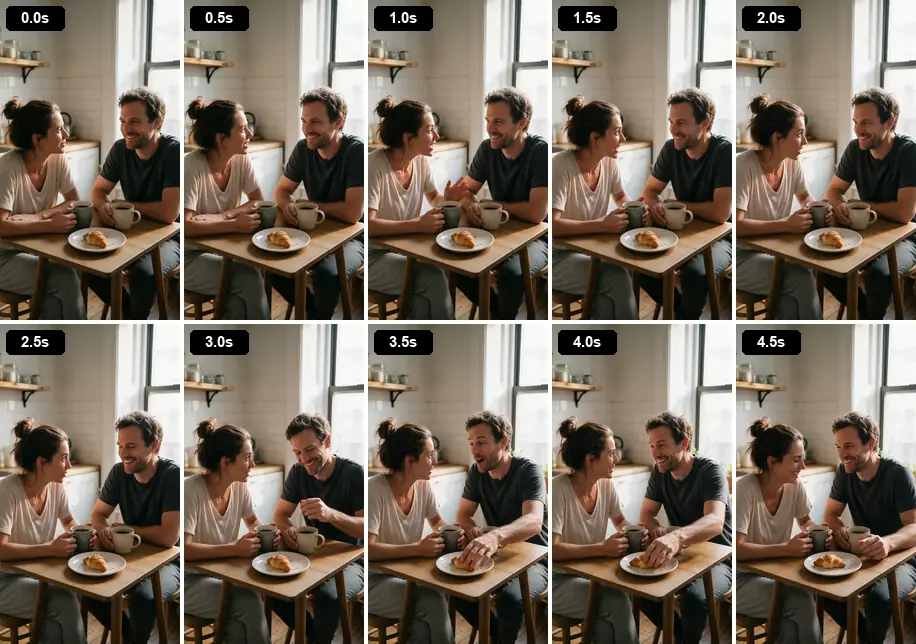
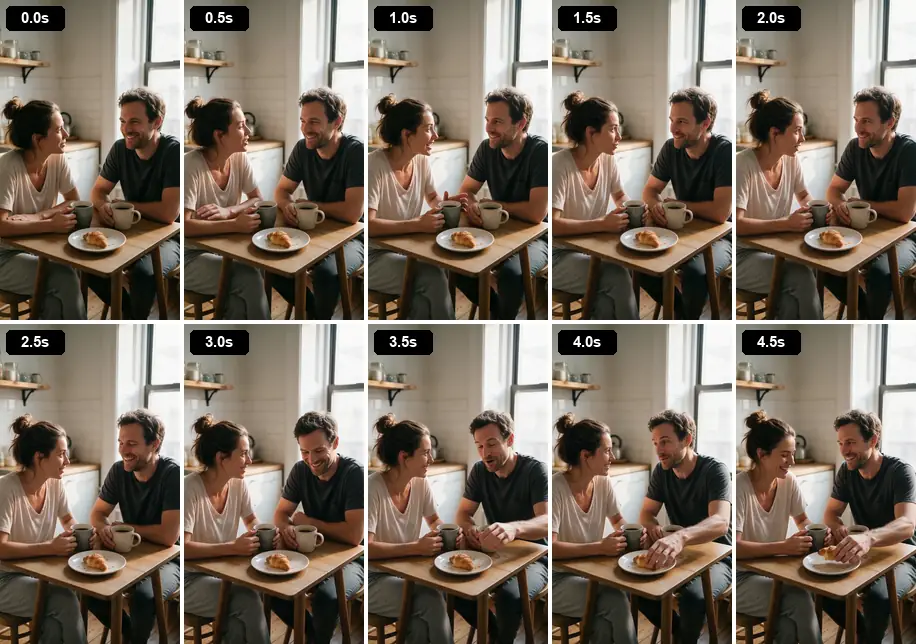
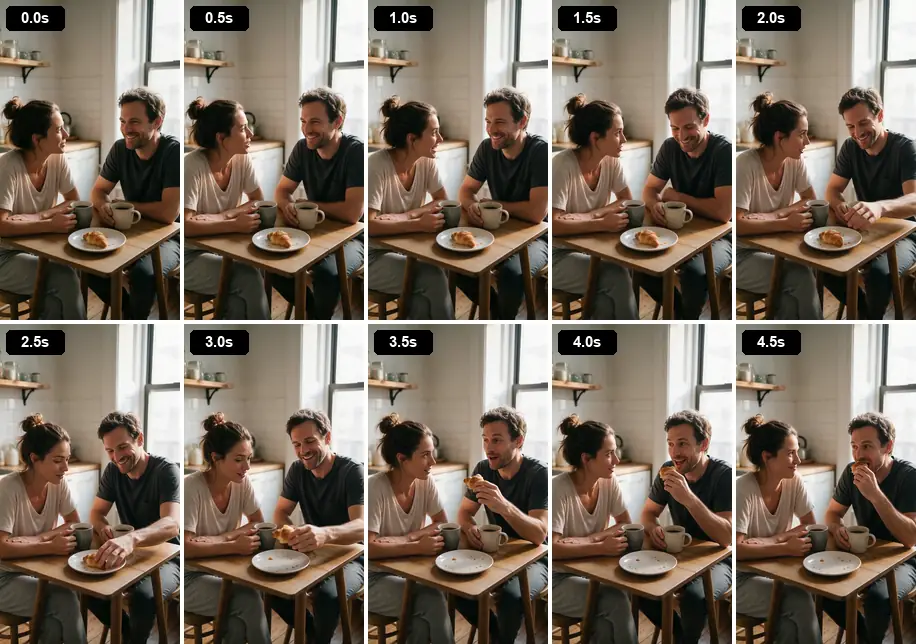
Two people talking · 36/36

Wan 3.0 creates its own soundtrack, including speech. We scripted two lines for two people and asked for no music.
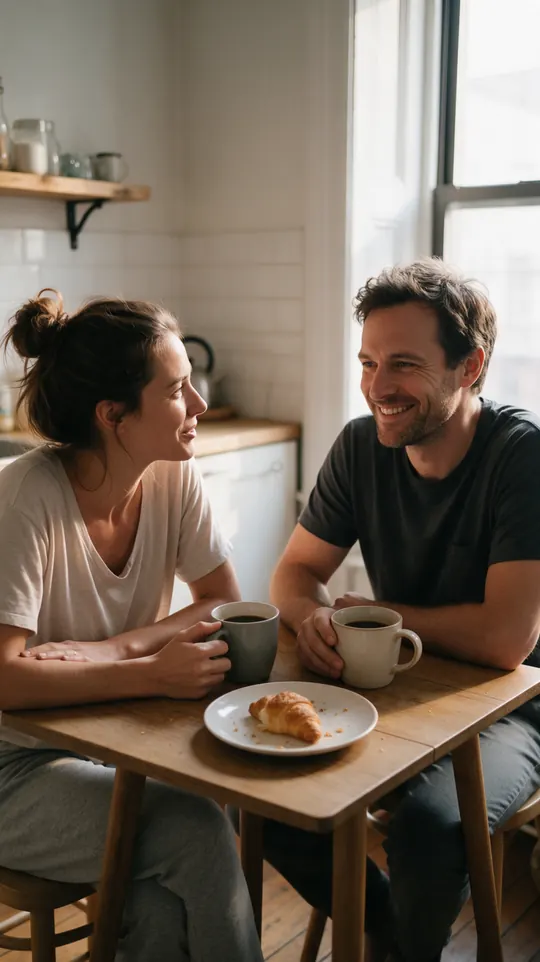
Starting image: a woman and a man at a small kitchen table with coffee mugs and one croissant
Starting image

The prompt, word for word

“The woman asks, "You're not taking the last croissant, are you?" The man laughs and says, "Watch me." Static camera. No background music.”

5 s · 720p · sound on · 25 credits per run

Run 1 · 12/12
Play with sound
Run 2 · 12/12
Play with sound
Run 3 · 12/12
Play with sound
  • Both lines came out word for word in all three runs, in order, with the right mouth moving each time.
  • No background music, as requested.
  • The mix is very loud: −7 to −9 LUFS, with peaks at full scale.
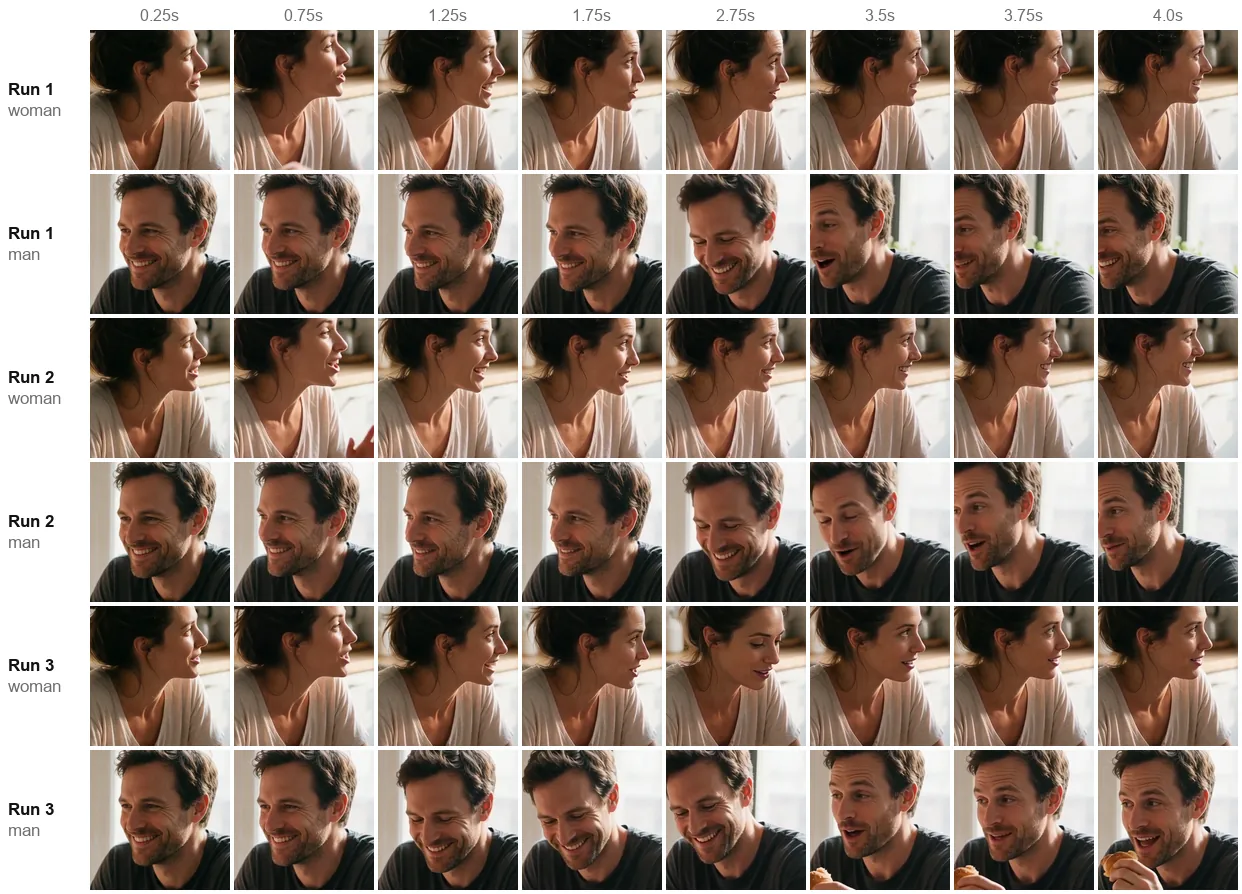
Close-ups of the woman and the man in all three runs: her mouth moves during her line, his during “Watch me”
Who speaks when. Her mouth moves during her line (0–2.5 s), and his moves during “Watch me” (about 3.5–4.2 s), in all three runs.
  • Run 1 · 12/12 · 56 s · −9.0 LUFS
    She says her line at 0.0–3.0 s; he laughs and answers “Watch me” at 3.6–4.1 s. Word for word, right speaker, no music. He reaches for the croissant but leaves it.
  • Run 2 · 12/12 · 55 s · −7.1 LUFS
    Her line at 0.0–2.4 s, his laugh at 2.5–3.2 s, “Watch me” at 3.5–4.3 s, then he picks up the croissant. Word for word.
  • Run 3 · 12/12 · 56 s · −8.0 LUFS
    He laughs during her line (0.0–2.6 s), takes the croissant at 2.2 s, says “Watch me” at 3.6–4.0 s and bites into it. Word for word.
CriterionRun 1Run 2Run 3
Prompt222
Subject222
Physics222
Camera222
Detail222
Sound222
Total12/1212/1212/12
See ten frames from every run

Mode 2

Reference images

Reference images · one face

One photo, a new scene · 32/36

Reference mode builds a new scene from tagged pictures instead of animating a first frame. First test: one face in an entirely different place.

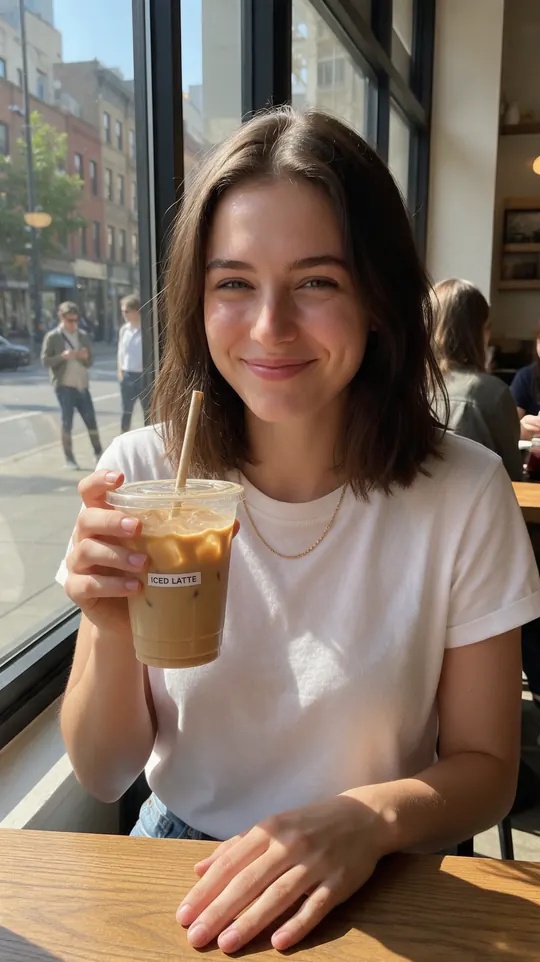
A young woman at a sunny cafe table holding an iced latte
[Image 1] face and hair

The prompt, word for word

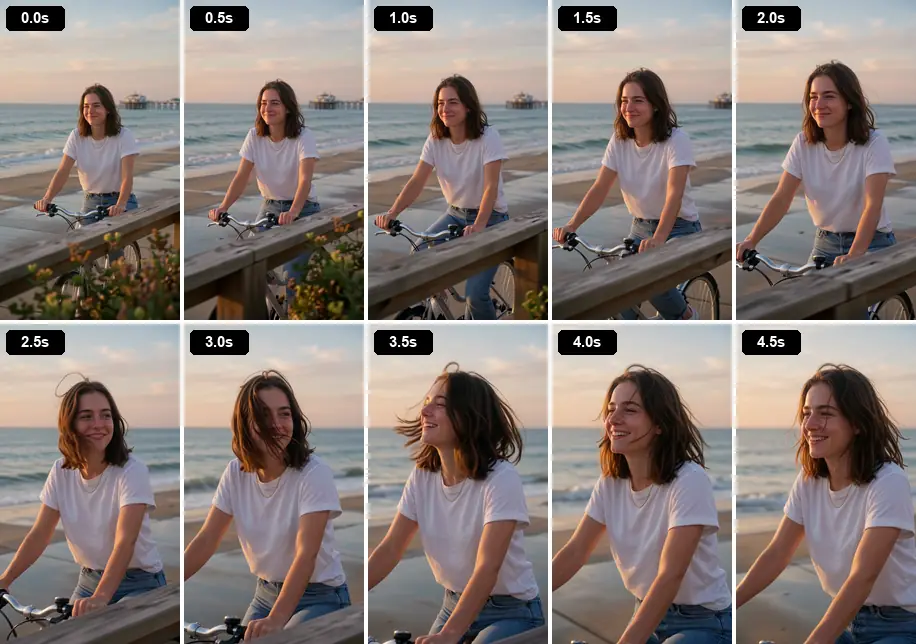
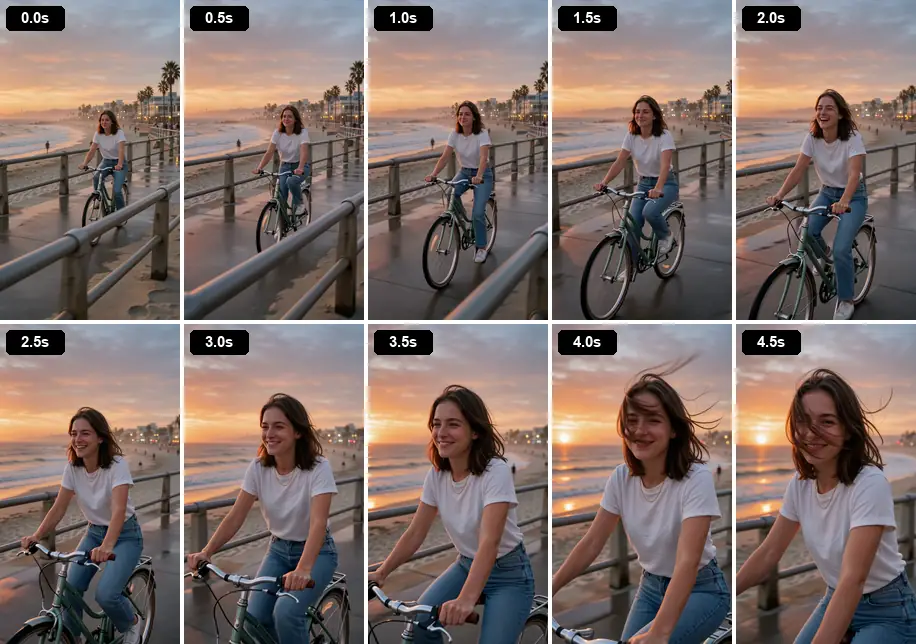
“[Image 1] is the woman's face and hair. The woman from [Image 1] rides a bicycle along a seaside promenade at sunset, laughing as the wind moves her hair. The camera tracks alongside her.”

5 s · 720p · 9:16 · sound on · reference mode · 25 credits per run

Run 1 · 12/12
Play with sound
Run 2 · 11/12
Play with sound
Run 3 · 9/12
Play with sound
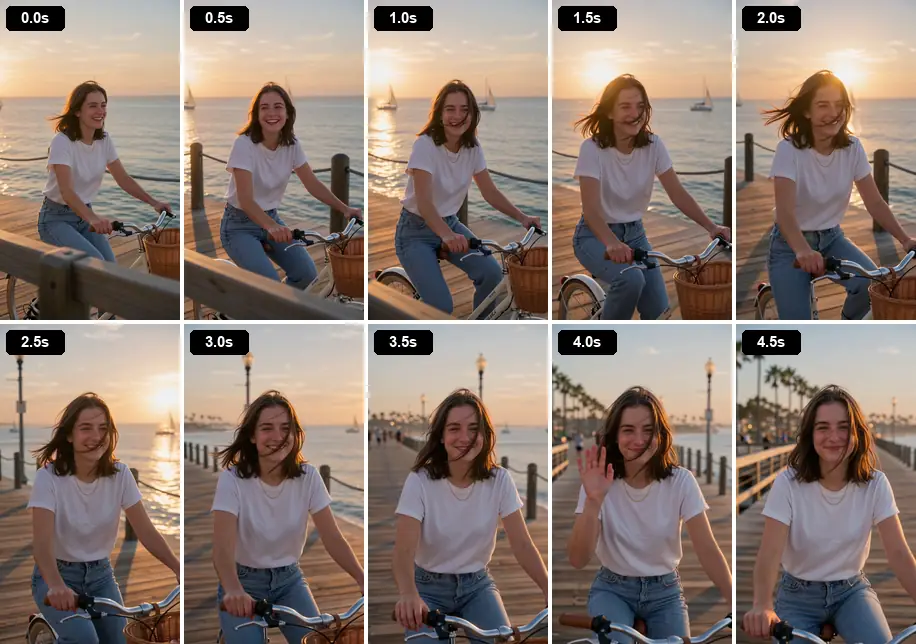
  • The face and hair matched the photo in all three runs.
  • She also kept the café T-shirt and necklace in every run: a reference carries over the outfit unless you describe another one.
  • Run 3 added a wave and allowed the background to drift.
  • Run 1 · 12/12 · 79 s · −25.6 LUFS
    Same face and hair as in the café photo, now on a seaside boardwalk at sunset. The camera rides alongside, and the wind blows her hair across her face at 2.5–3.0 s. Waves and gulls.
  • Run 2 · 11/12 · 82 s · −18.7 LUFS
    A sunset promenade lined with palms. The face holds, but the camera rides in front of her instead of alongside.
  • Run 3 · 9/12 · 84 s · −27.1 LUFS
    She waves at 3.8–4.0 s, which we didn't ask for, and the background drifts from a pier with sailboats to a palm-lined boardwalk between 2.2 and 4.2 s. Camera in front of her.
CriterionRun 1Run 2Run 3
Prompt221
Subject222
Physics222
Camera211
Detail221
Sound222
Total12/1211/129/12
See ten frames from every run

Reference images · face, product, room

Three references in one shot · 33/36

The harder version: a face, a product and a room, each tagged, combined into a single action.

A young woman at a sunny cafe table holding an iced latte
[Image 1] face and hair
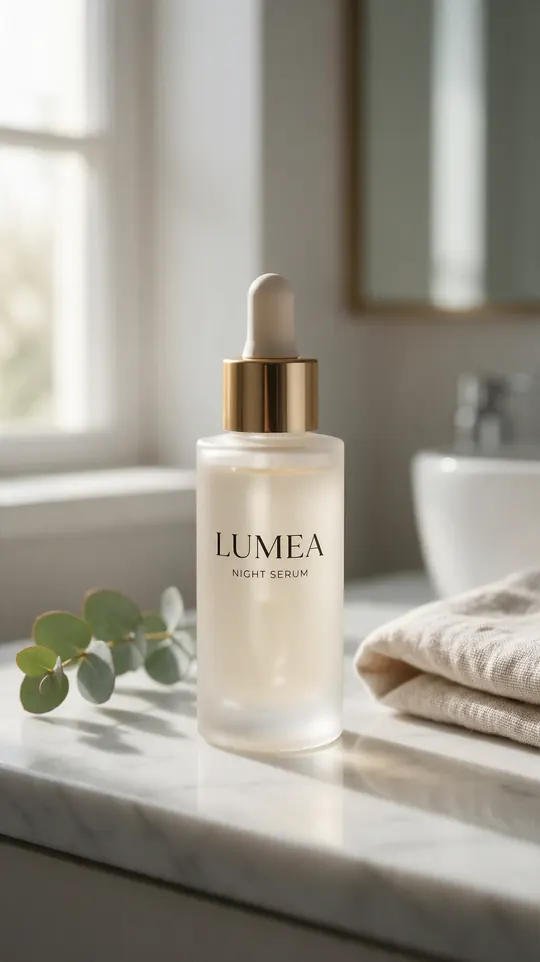
The LUMEA serum bottle on a marble counter
[Image 2] product
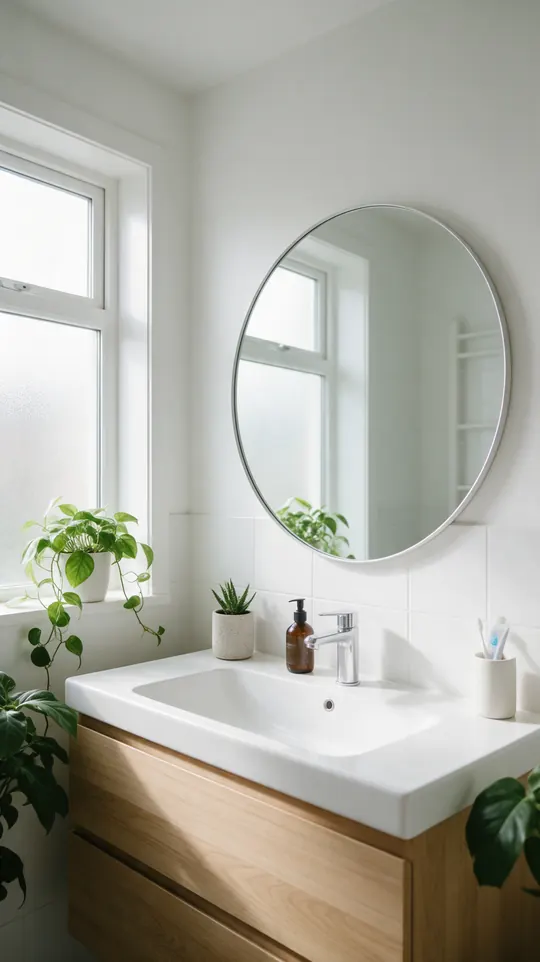
A bright bathroom with a round mirror, an oak vanity and plants
[Image 3] room

The prompt, word for word

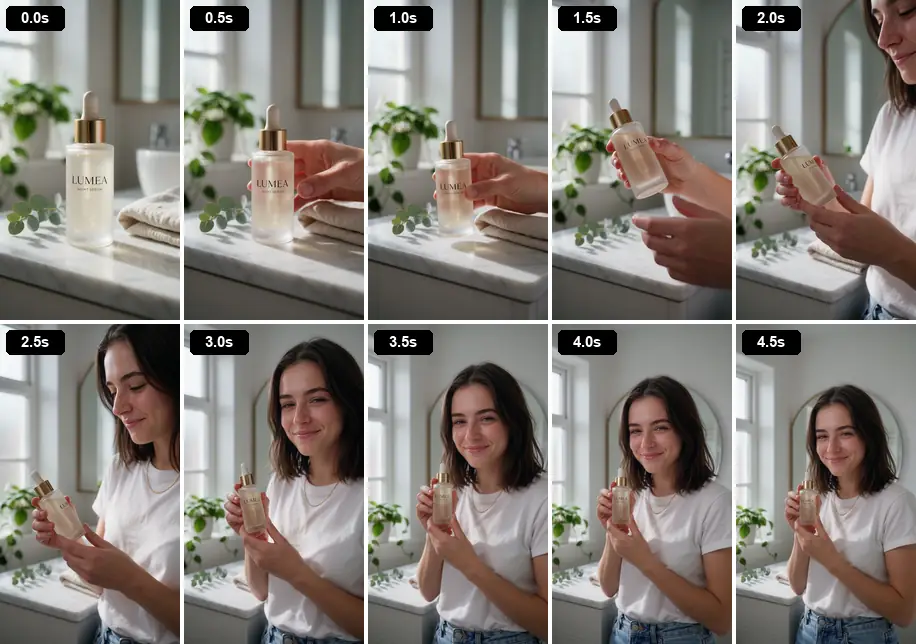
“[Image 1] is the woman's face and hair, [Image 2] is the LUMEA serum bottle, [Image 3] is the bathroom. In the bathroom from [Image 3], the woman from [Image 1] picks up the [Image 2] bottle, turns the label to the camera and smiles.”

5 s · 720p · 9:16 · sound on · reference mode · 25 credits per run

Run 1 · 11/12
Play with sound
Run 2 · 10/12
Play with sound
Run 3 · 12/12
Play with sound
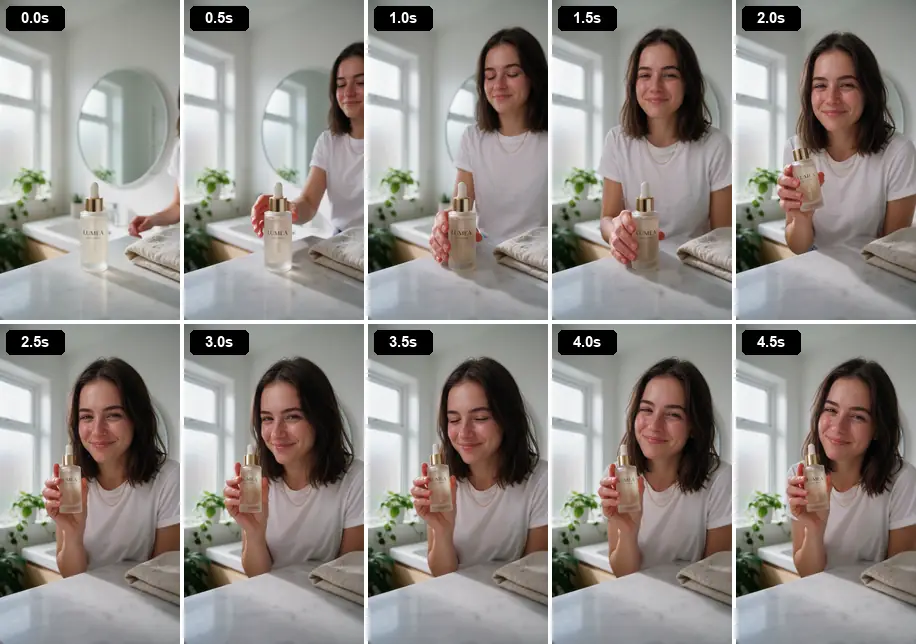
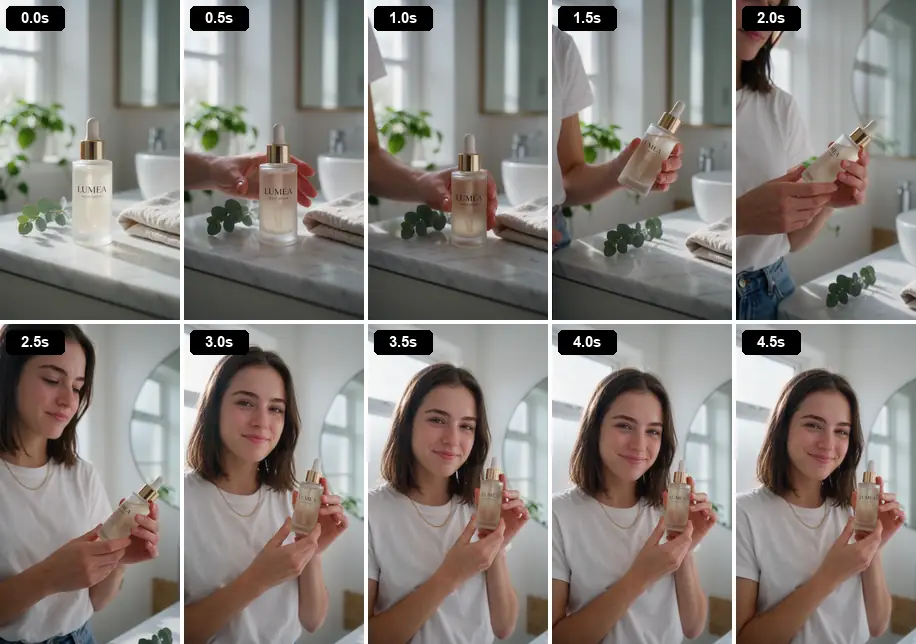
  • All three runs combined the woman, the LUMEA bottle and the bathroom, with the label remaining readable in her hand.
  • Runs 1 and 3 opened on the counter from the product photo, then revealed the bathroom.
  • Quiet soundtracks: −32 to −48 LUFS.
  • Run 1 · 11/12 · 1 min 43 s · −40.1 LUFS
    Opens on the bottle on a marble counter; a hand picks it up, and the camera pulls back to reveal her in the bathroom with the round mirror. She turns the LUMEA label toward the camera and smiles. Very quiet.
  • Run 2 · 10/12 · 94 s · −48.3 LUFS
    Opens wide on the bathroom from the reference. She steps in, picks up the bottle and holds it toward the camera, smiling. Near-silent soundtrack.
  • Run 3 · 12/12 · 2 min 12 s · −32.2 LUFS
    Like run 1: a hand lifts the bottle from the counter, she is revealed by 2.5 s and holds the label toward the camera from 2.8 s. Face, bottle and room all match the references.
CriterionRun 1Run 2Run 3
Prompt222
Subject222
Physics222
Camera222
Detail222
Sound102
Total11/1210/1212/12
See ten frames from every run

Mode 3

First and last frame

First + last frame

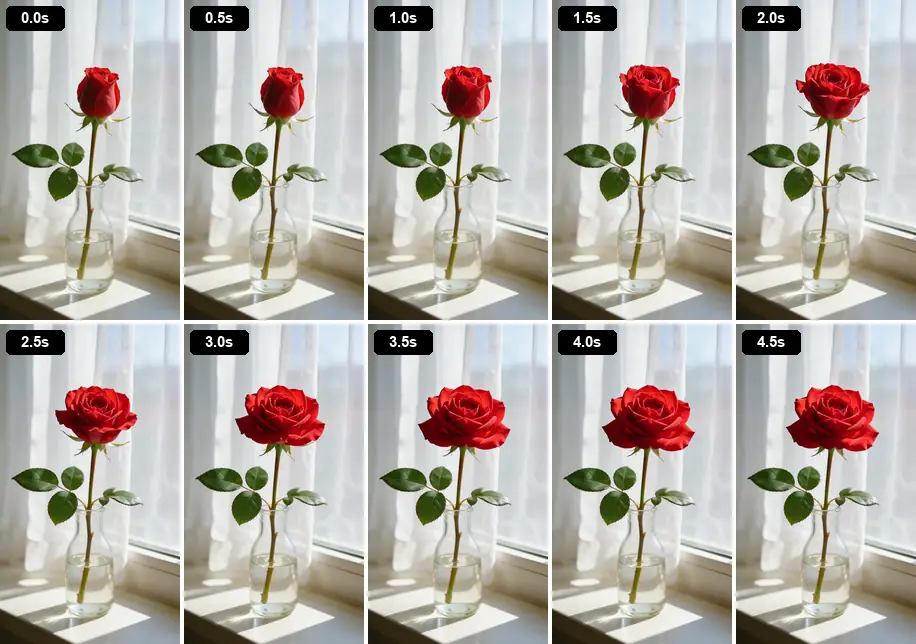
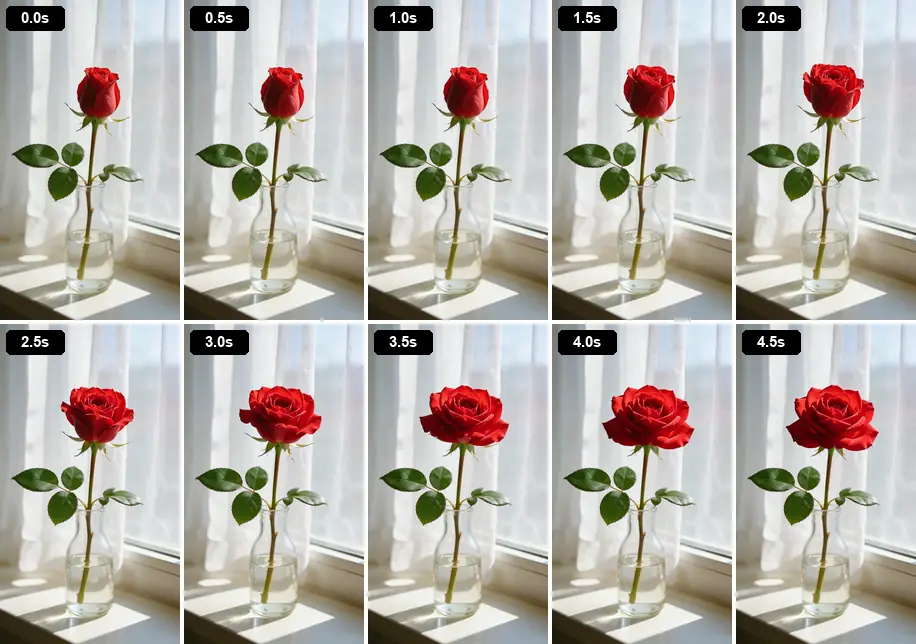
A rose that has to open on cue · 31/36

Give Wan 3.0 a first and last frame, and it fills in the motion between them. We asked a closed bud to become a bloom we made with the Image Editor.

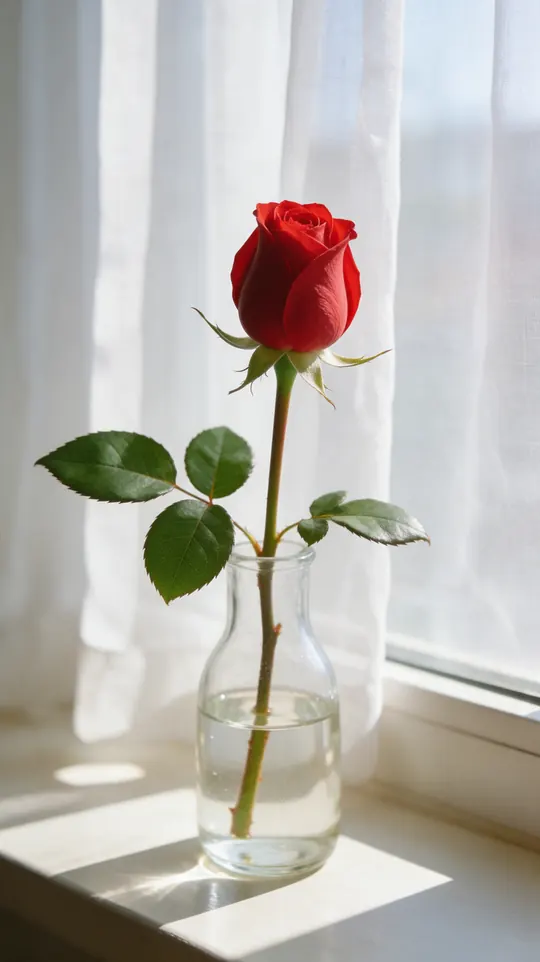
First frame: a closed red rose bud in a glass vase on a sunny windowsill
First frame
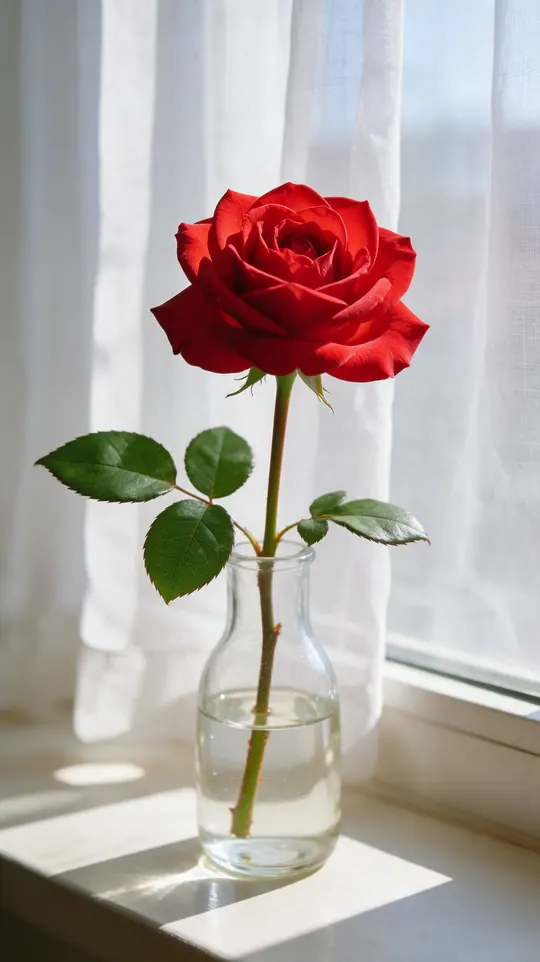
Last frame: the same rose fully open, made with the ClipRush Image Editor
Last frame

The prompt, word for word

“Time-lapse: the rose bud slowly opens into a full bloom, its petals unfolding one by one. Static camera, soft morning light.”

5 s · 720p · sound on · first + last frame · 25 credits per run

Run 1 · 10/12
Play with sound
Run 2 · 10/12
Play with sound
Run 3 · 11/12
Play with sound
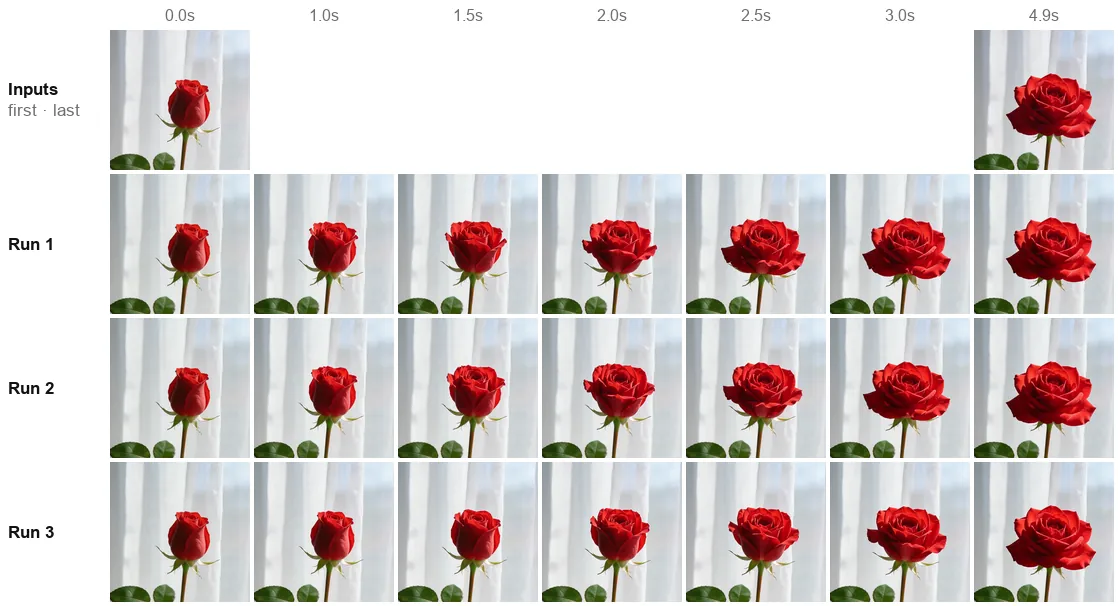
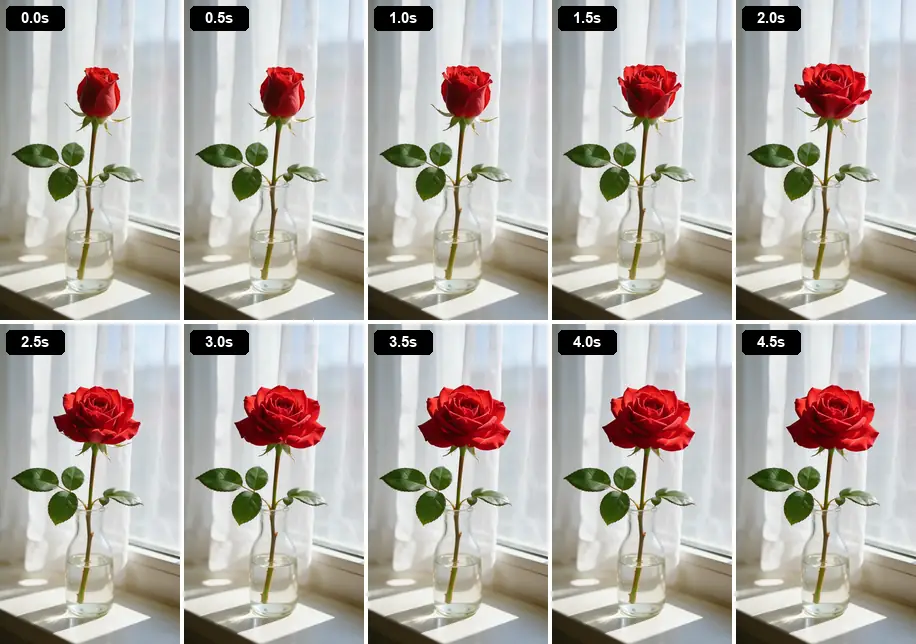
  • Every run started on our bud and ended on our bloom: the average pixel difference from the inputs was 4 at the start and 5–6 at the end, versus 37 between the two images.
  • The opening was finished by 3 seconds, and the rose held still for the last two.
  • Run 1's soundtrack was close to silent (−61 LUFS).
The bud and bloom inputs above the three runs: each starts on the bud, opens between 1 and 3 seconds and ends on the bloom
Our two inputs (top) and all three runs. Each starts on the bud, opens between 1 and 3 seconds, and ends on the bloom.
  • Run 1 · 10/12 · 64 s · −61.4 LUFS
    Starts on the bud and ends on the bloom. The petals open between 1.0 and 3.0 s, then the rose holds still. Near-silent.
  • Run 2 · 10/12 · 79 s · −45.5 LUFS
    The same path, almost frame for frame. Faint birdsong.
  • Run 3 · 11/12 · 61 s · −39.8 LUFS
    Same again, with a slightly slower opening. Quiet ambience.
CriterionRun 1Run 2Run 3
Prompt222
Subject222
Physics222
Camera222
Detail222
Sound001
Total10/1210/1211/12
See ten frames from every run

Mode 4

Image to video

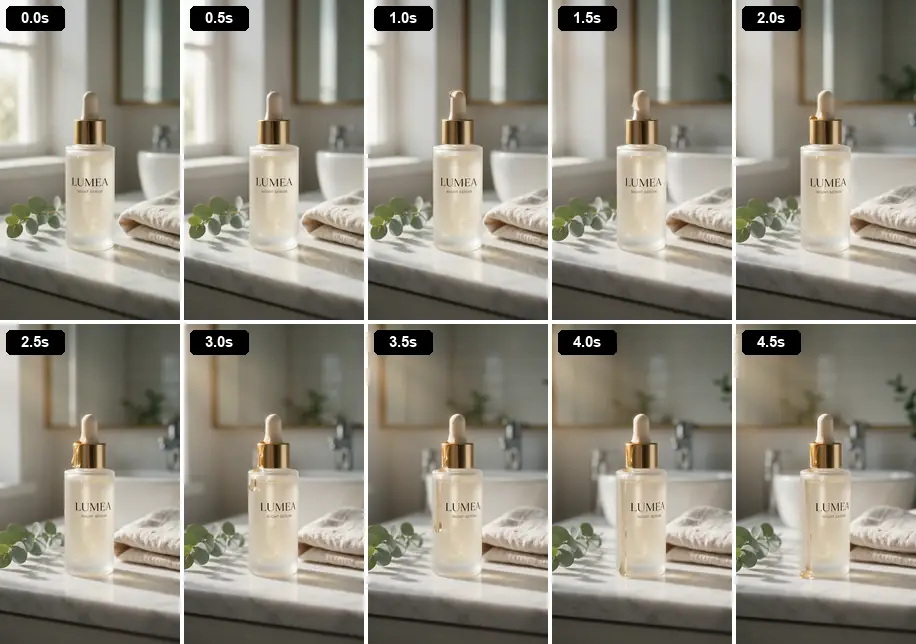
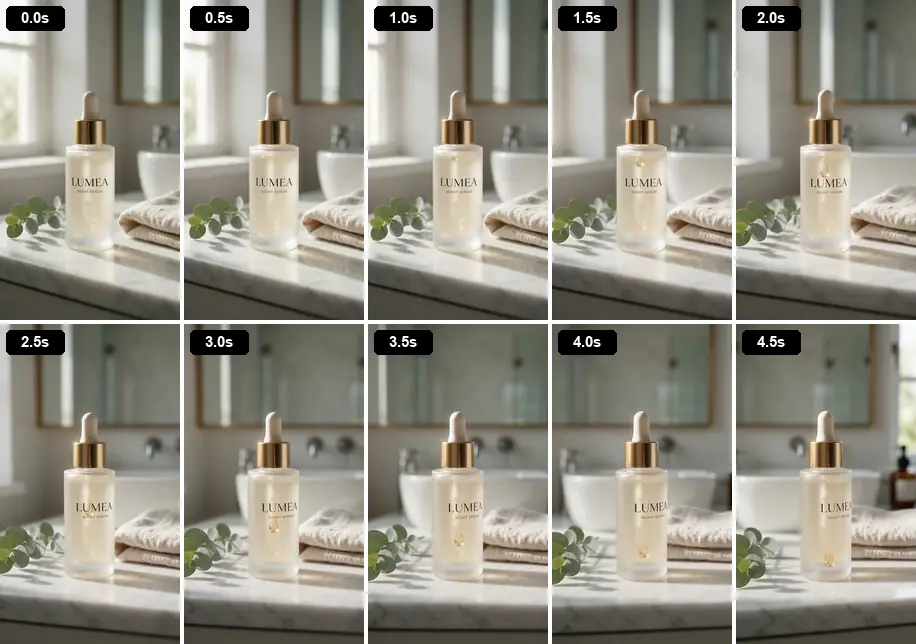
Image to video · product

A product shot with printed text · 32/36

The bread-and-butter job: animate a product photo without ruining the label.

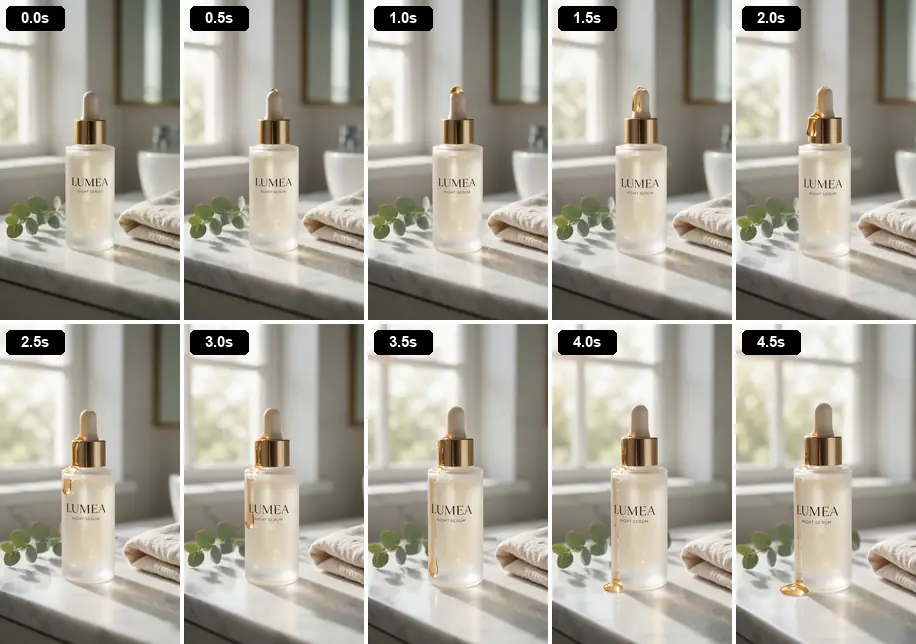
Starting image: a frosted serum bottle labelled LUMEA NIGHT SERUM on a marble bathroom counter
Starting image

The prompt, word for word

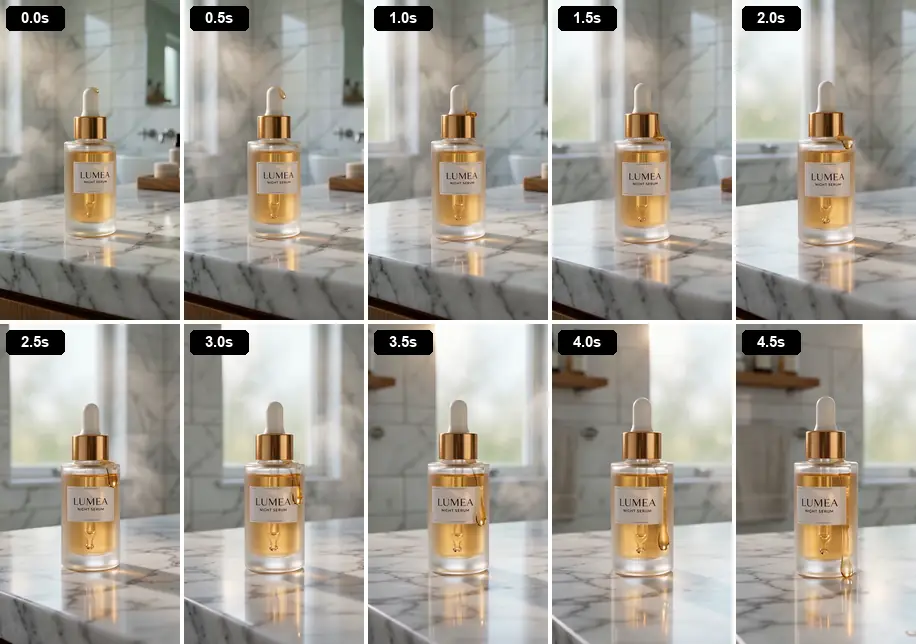
“The camera slowly orbits the serum bottle from left to right while soft morning light glides across the frosted glass and the LUMEA label. A single golden drop slides down the dropper.”

5 s · 720p · sound on · 25 credits per run

Run 1 · 11/12
Play with sound
Run 2 · 9/12
Play with sound
Run 3 · 12/12
Play with sound
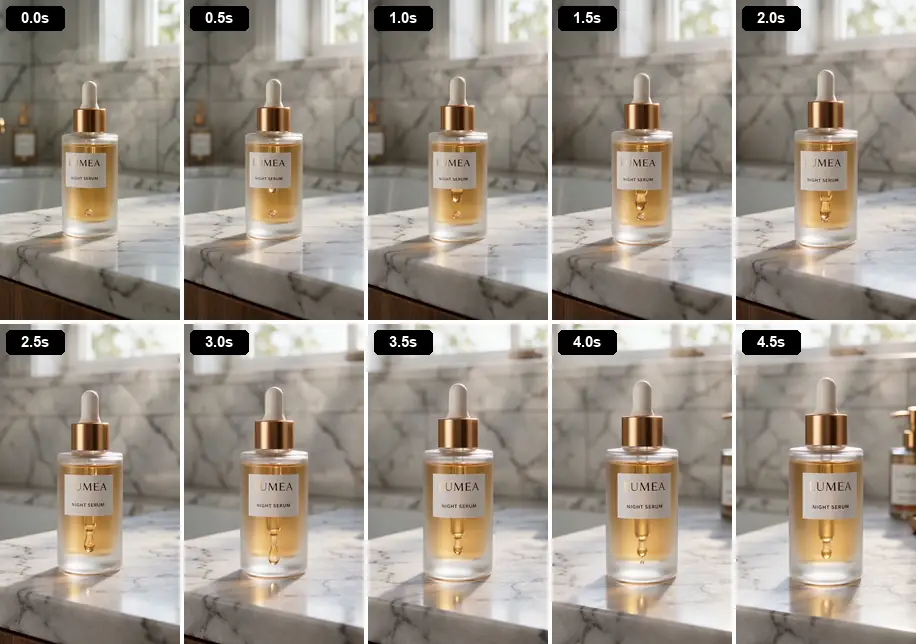
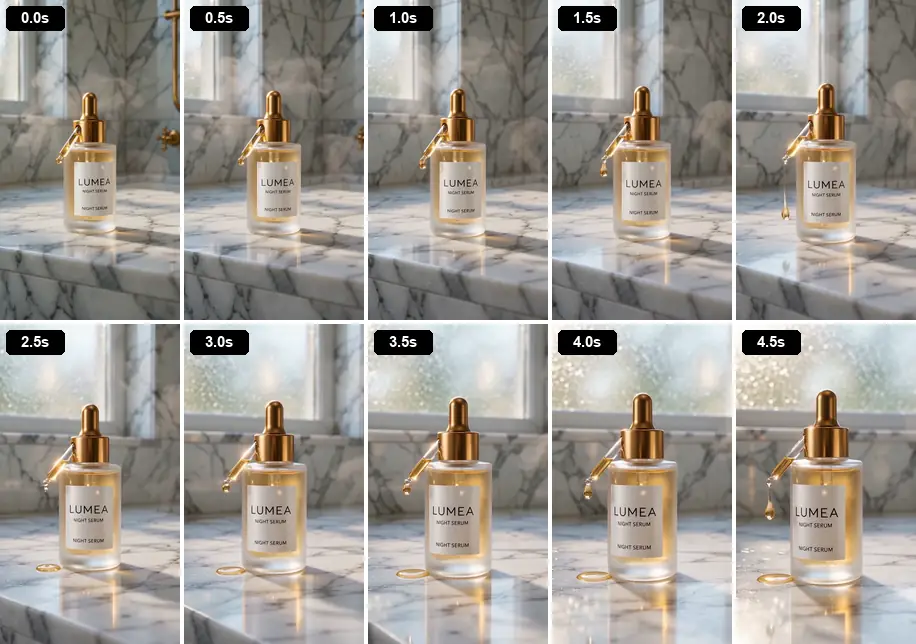
  • The label never broke: LUMEA and NIGHT SERUM remained readable in every frame of all three runs.
  • Run 2 placed the drop inside the bottle.
  • Two of three soundtracks were very quiet (−36 and −43 LUFS).
  • Run 1 · 11/12 · 60 s · −36.0 LUFS
    A slow orbit brings the mirror and sink into view from 2.5 s. A golden drop forms on the bulb at 0.5 s and runs down the cap and glass from 2.2 s. The label remains readable throughout. Very quiet.
  • Run 2 · 9/12 · 58 s · −43.3 LUFS
    The clearest orbit of the three: new bottles appear on a shelf at 4.2 s as the camera swings around. But the drop forms inside the bottle, below the label, and hangs in the serum from 1.2 s, which a real drop can't do. Very quiet.
  • Run 3 · 12/12 · 62 s · −28.4 LUFS
    A golden drop beads on top of the bulb at 0.5 s, runs down the collar and glass from 1.8 s, and pools on the marble by 3.8 s. Subtle orbit, label readable throughout. Soft liquid sounds.
CriterionRun 1Run 2Run 3
Prompt212
Subject222
Physics212
Camera222
Detail222
Sound112
Total11/129/1212/12
See ten frames from every run

Image to video · animal

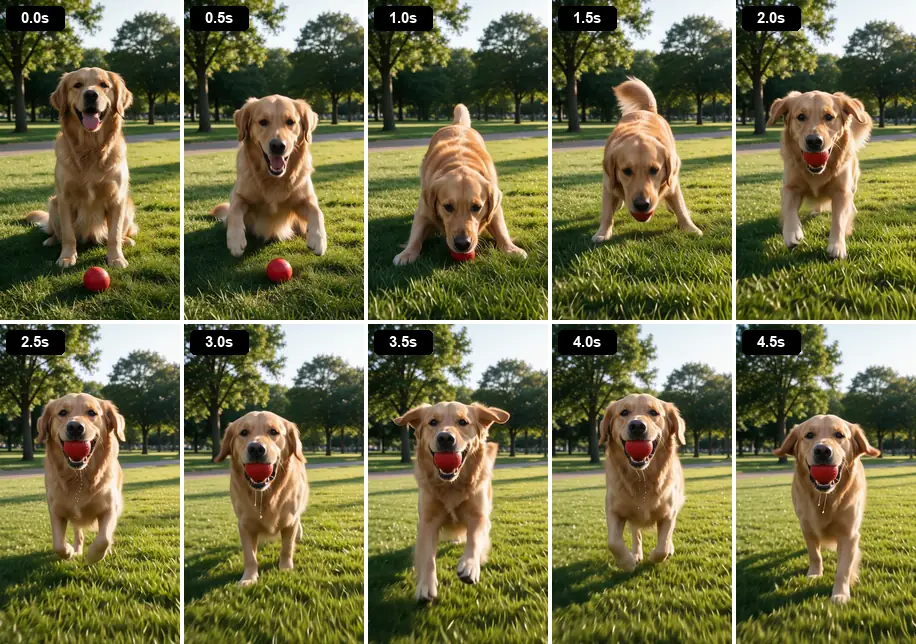
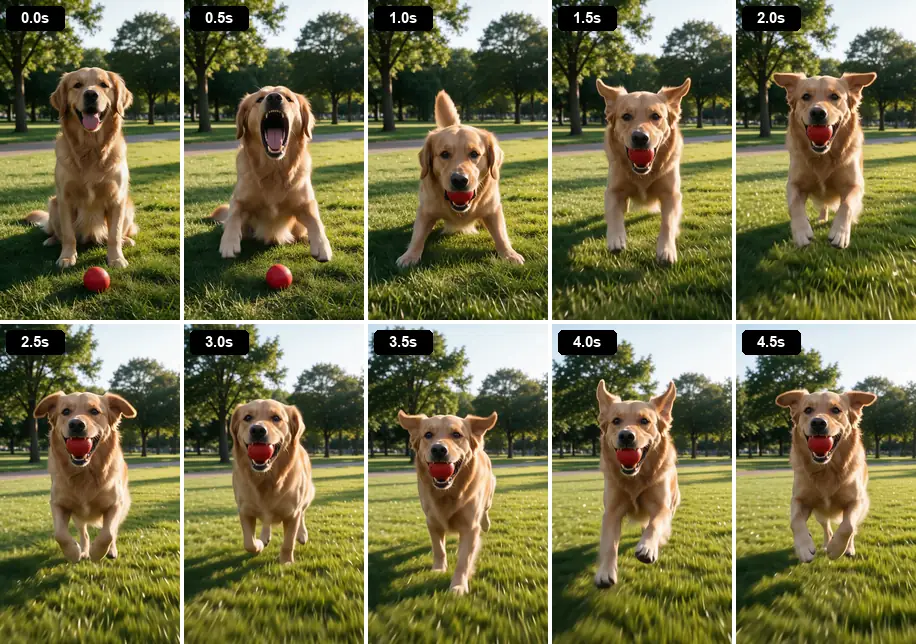
A dog running at the camera · 31/36

Fast motion, fur and a moving camera all at once.

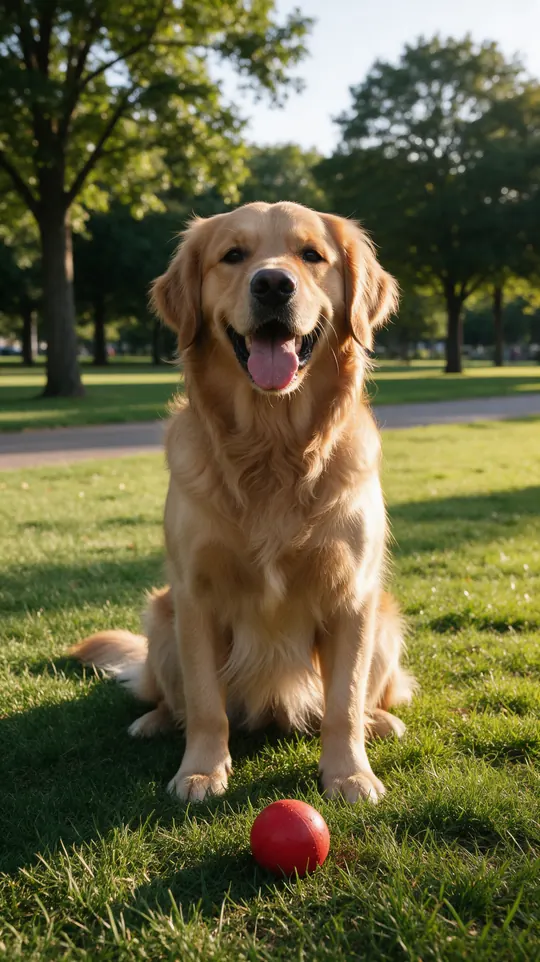
Starting image: a golden retriever sitting on a park lawn with a red ball in front of its paws
Starting image

The prompt, word for word

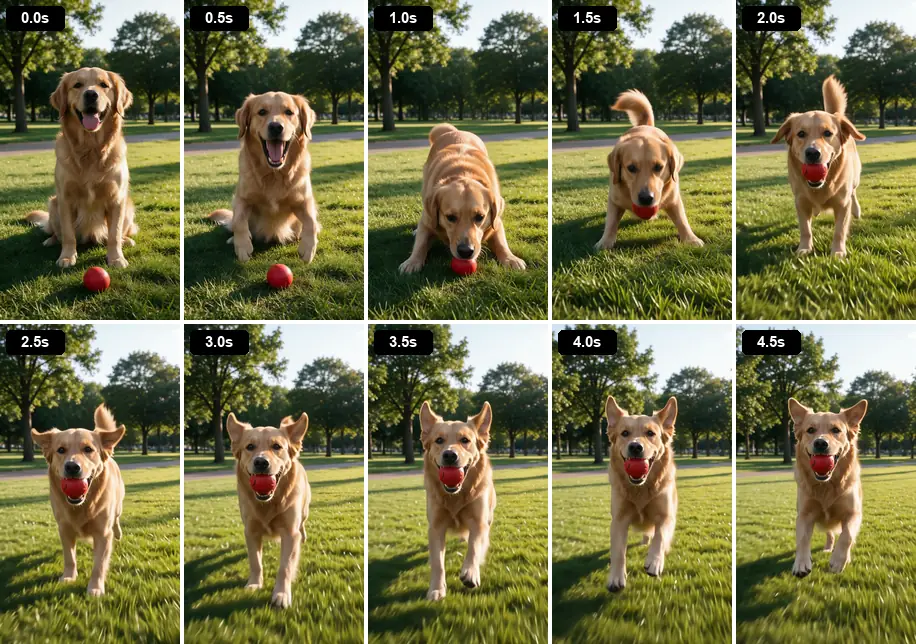
“The dog grabs the red ball in its mouth and runs toward the camera, ears flapping, as the camera tracks backward low to the ground.”

5 s · 720p · sound on · 25 credits per run

Run 1 · 10/12
Play with sound
Run 2 · 12/12
Play with sound
Run 3 · 9/12
Play with sound
  • The motion and camera were right in all three runs: the grab, the run, and a low camera backing away.
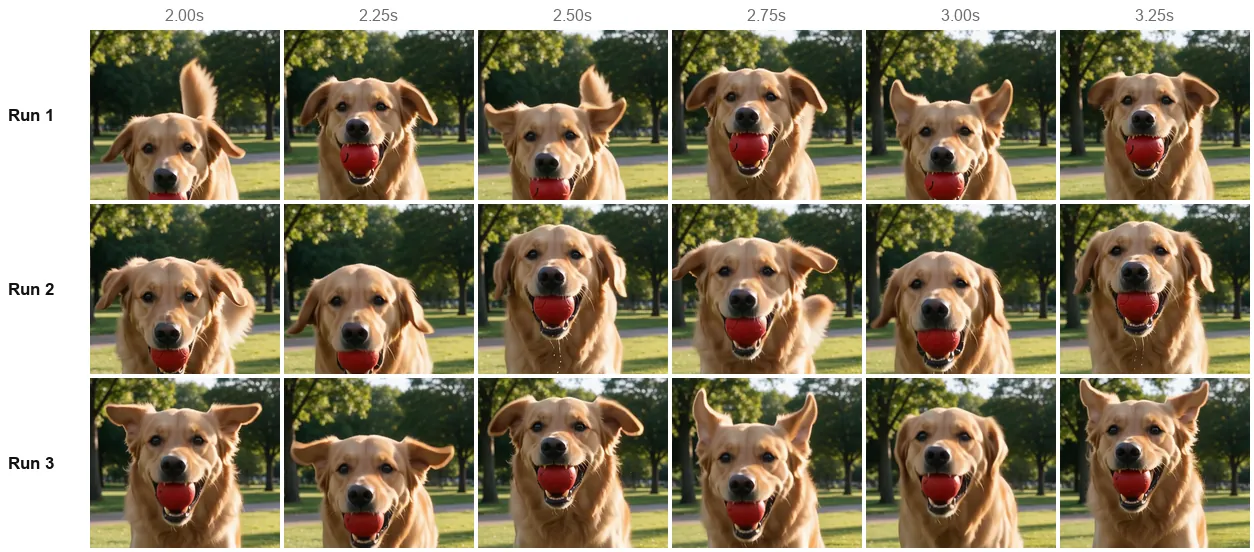
  • In runs 1 and 3, the dog's floppy ears briefly turned upright and pointed, making it look like a different breed.
The dog's head from 2.0 to 3.25 seconds in all three runs; in runs 1 and 3 the ears switch between floppy and pointed
The dog's head between 2.0 and 3.25 s. Runs 1 and 3 switch between floppy and pointed ears; run 2 remains a retriever.
  • Run 1 · 10/12 · 59 s · −22.6 LUFS
    Grabs the ball at 0.8 s and runs toward the camera from 1.5 s while the camera backs away low. Its floppy ears turn upright and pointed at 2.0, 2.5 and 3.0 s, so it briefly looks like a different breed.
  • Run 2 · 12/12 · 59 s · −23.6 LUFS
    The clean run: ball in mouth at 0.8 s, a steady run toward the low, retreating camera, with ears flapping and drool flying. It remains the same retriever throughout.
  • Run 3 · 9/12 · 60 s · −15.4 LUFS
    An odd, overly wide-open jaw at 0.5 s before the grab, then the same ear problem as run 1: pointed ears at 2.75 and 3.25 s.
CriterionRun 1Run 2Run 3
Prompt222
Subject020
Physics221
Camera222
Detail222
Sound222
Total10/1212/129/12
See ten frames from every run

Image to video · landscape

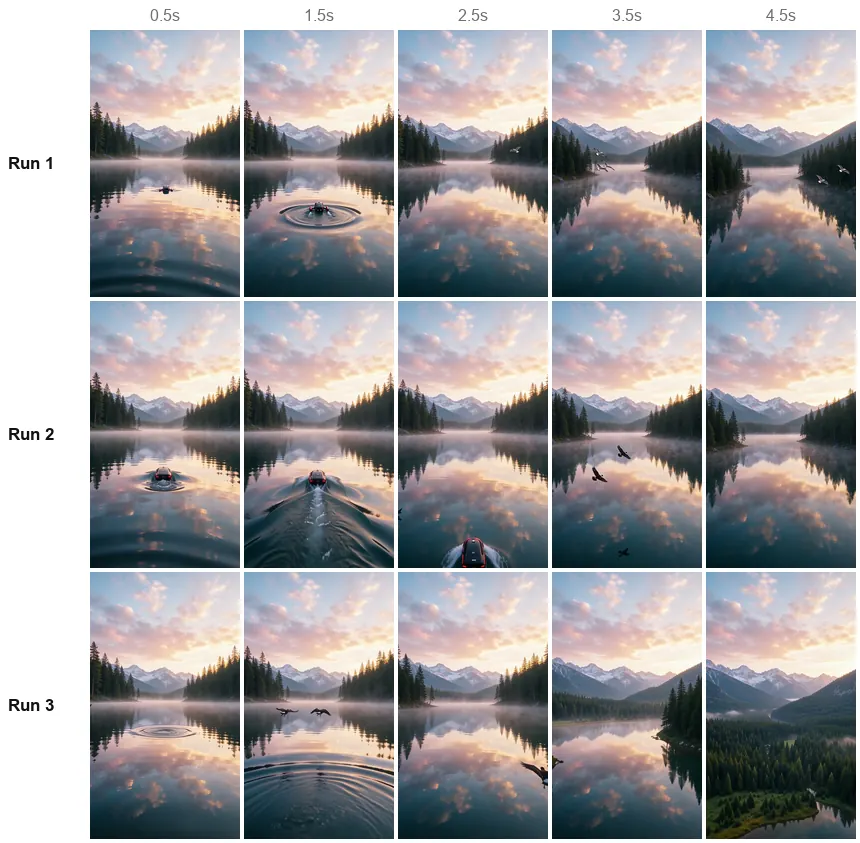
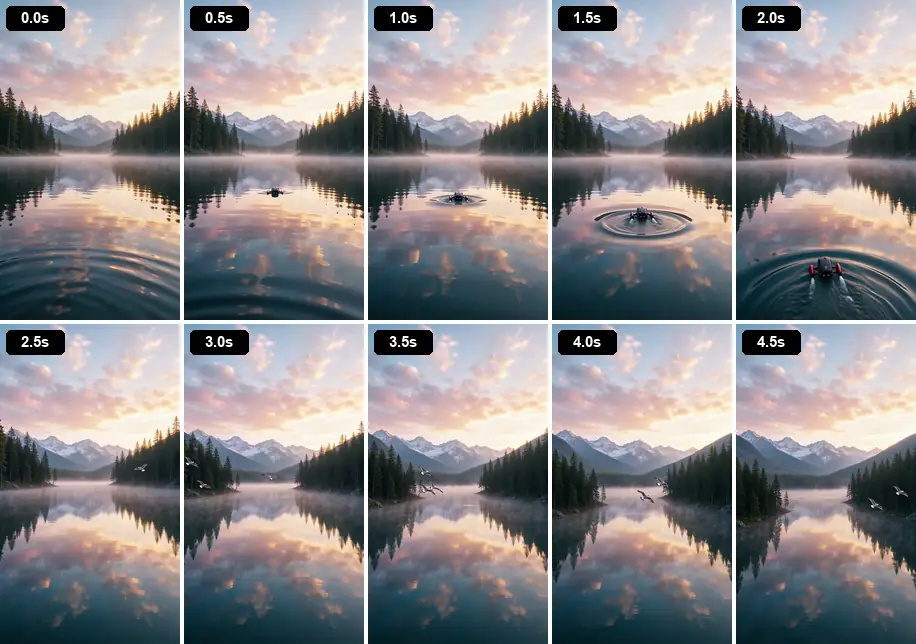
An aerial move over a lake · 30/36

A compound camera move: glide, then rise.

Starting image: a calm alpine lake at sunrise seen from just above the water
Starting image

The prompt, word for word

“The drone glides forward low over the lake, then rises to reveal the valley beyond. Mist drifts over the water and two birds fly across the frame.”

5 s · 720p · sound on · 25 credits per run

Run 1 · 9/12
Play with sound
Run 2 · 9/12
Play with sound
Run 3 · 12/12
Play with sound
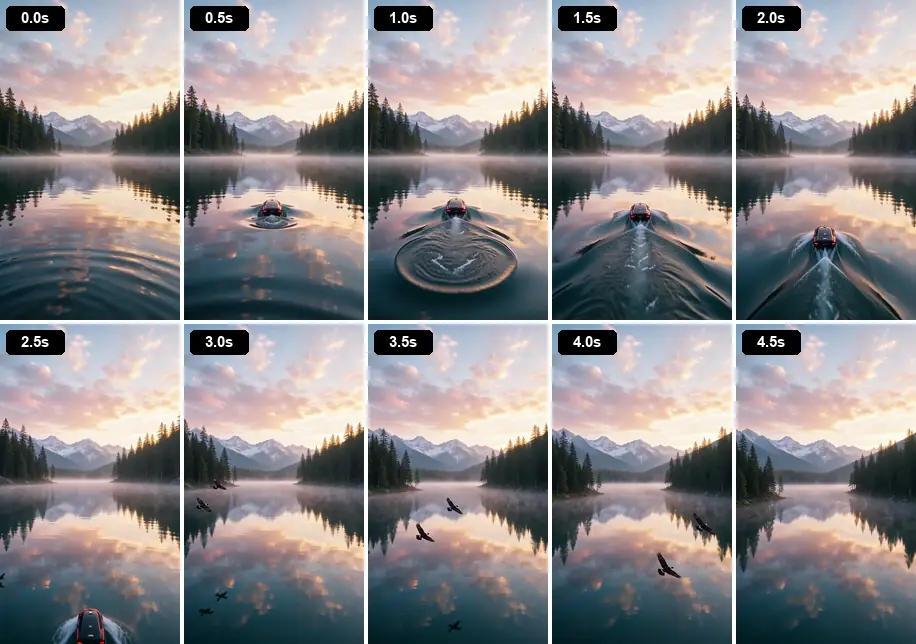
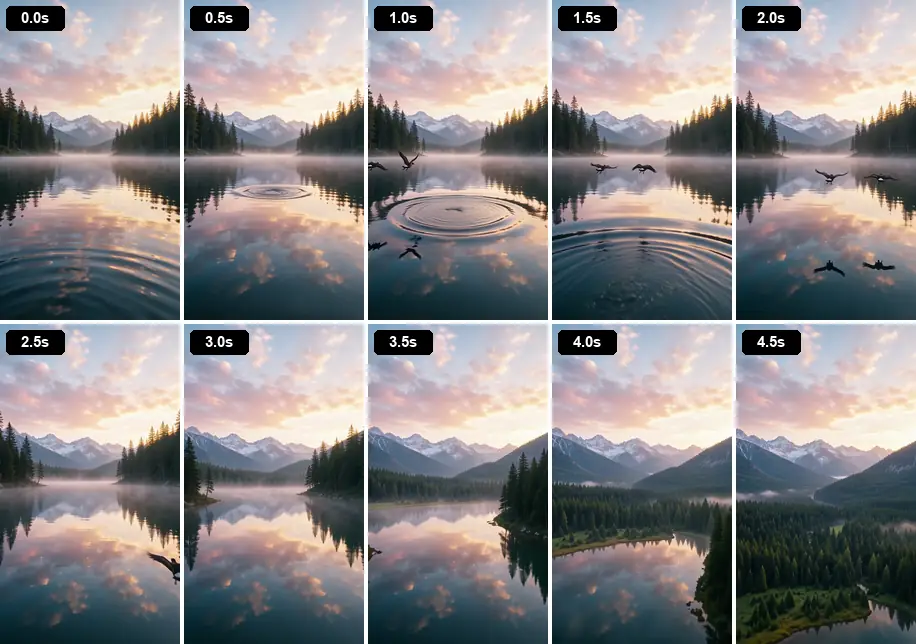
  • Two of three runs drew an actual drone on the water: “the drone glides” was interpreted as an object, not as the camera.
  • Only run 3 rose to reveal the valley.
Five frames from each lake run: runs 1 and 2 show a drone on the water, run 3 rises over the forest
Runs 1 and 2 place a drone on the water and never rise. Run 3 makes the aerial move we intended.
  • Run 1 · 9/12 · 56 s · −28.5 LUFS
    Took “the drone” literally: a small drone sits on the water and creates ripples at 0.5–1.5 s. Three or four birds instead of two appear from 2.5 s, and the camera never rises.
  • Run 2 · 9/12 · 68 s · −14.0 LUFS
    Again, a drone appears in frame, now skimming toward the camera with a wake at 0.5–2.5 s. The two birds are right, with reflections in the water at 3.5 s, but there is no rise.
  • Run 3 · 12/12 · 56 s · −19.2 LUFS
    What we requested: two birds take off from the water at 0.5 s and cross the frame, while the camera glides forward and rises from 2.5 s to reveal the forested valley.
CriterionRun 1Run 2Run 3
Prompt002
Subject222
Physics222
Camera112
Detail222
Sound222
Total9/129/1212/12
See ten frames from every run

Mode 5

Text to video

Text to video

The same product, from words alone · 28/36

No starting image this time: the bottle, label and room all have to come from the prompt.

The prompt, word for word

“A frosted glass serum bottle with a gold dropper and a label that reads "LUMEA" with "NIGHT SERUM" underneath stands on a white marble bathroom counter in soft morning light. The camera slowly orbits the bottle while a single golden drop slides down the dropper. Premium product commercial.”

5 s · 720p · 9:16 · sound on · 25 credits per run

Run 1 · 9/12
Play with sound
Run 2 · 12/12
Play with sound
Run 3 · 7/12
Play with sound
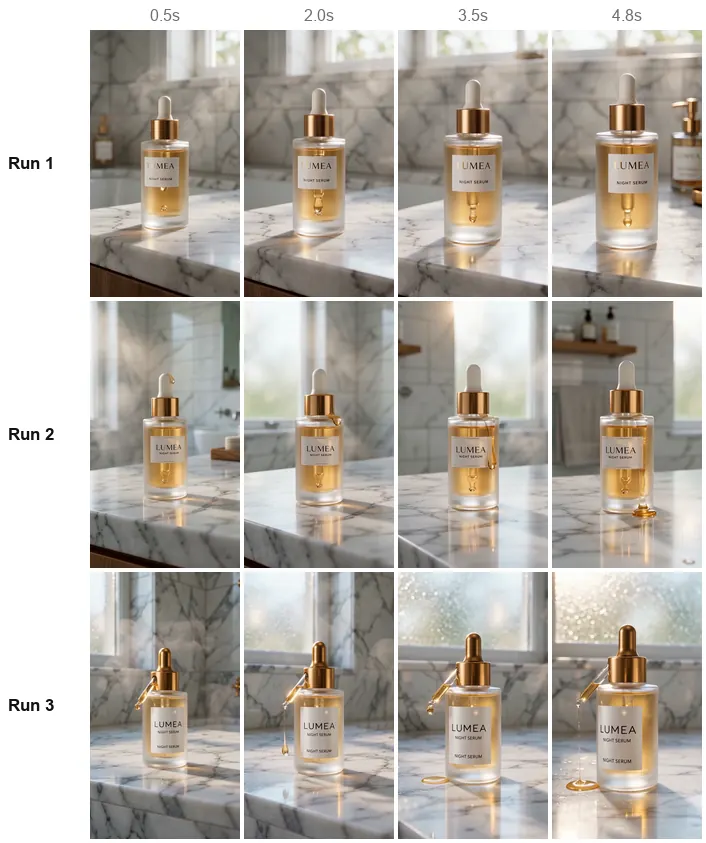
  • LUMEA was spelled correctly in all three runs.
  • Only run 2 got the physics right. Run 3 invented a second dropper and printed NIGHT SERUM twice.
Four frames from each text-to-video run: run 2 is clean, run 3 has a second dropper sticking out of the bottle
Run 2 is the clean one. Run 1 keeps the drop inside the bottle; run 3 grows a second dropper and repeats NIGHT SERUM.
  • Run 1 · 9/12 · 53 s · −16.4 LUFS
    The label and orbit are right, but the “drop” forms on the pipette inside the bottle, in the serum, and a pump bottle appears in the background at 4.0 s. The L of LUMEA hides behind the label's edge. Soft background music.
  • Run 2 · 12/12 · 1 min 46 s · −23.7 LUFS
    The run to copy: a drop beads on the bulb, runs down the collar and glass, and pools on the marble by 4.5 s while the camera orbits. Clean label.
  • Run 3 · 7/12 · 53 s · −8.4 LUFS
    An impossible bottle: a second glass pipette sticks out of the collar at an angle and drips. The label prints NIGHT SERUM twice, and the camera pushes in rather than orbiting.
CriterionRun 1Run 2Run 3
Prompt121
Subject222
Physics120
Camera221
Detail121
Sound222
Total9/1212/127/12
See ten frames from every run

Mode 6

30-second takes

30-second take

Seven actions in one 30-second shot · 19/24

Wan 3.0 is the only engine in ClipRush that goes past 15 seconds. We packed a 30-second clip with seven actions and asked for one continuous take.

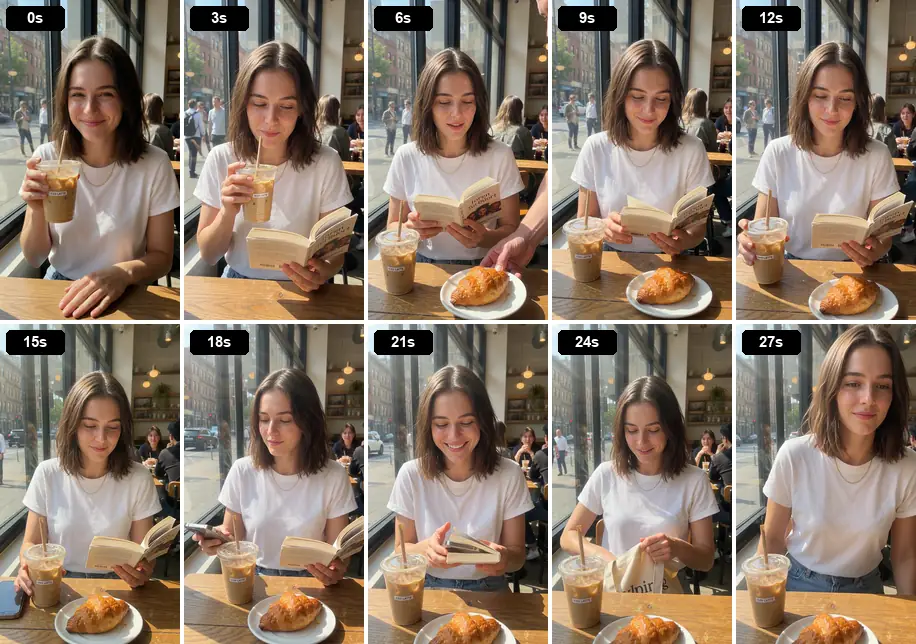
Starting image: a young woman at a sunny cafe table holding an iced latte
Starting image

The prompt, word for word

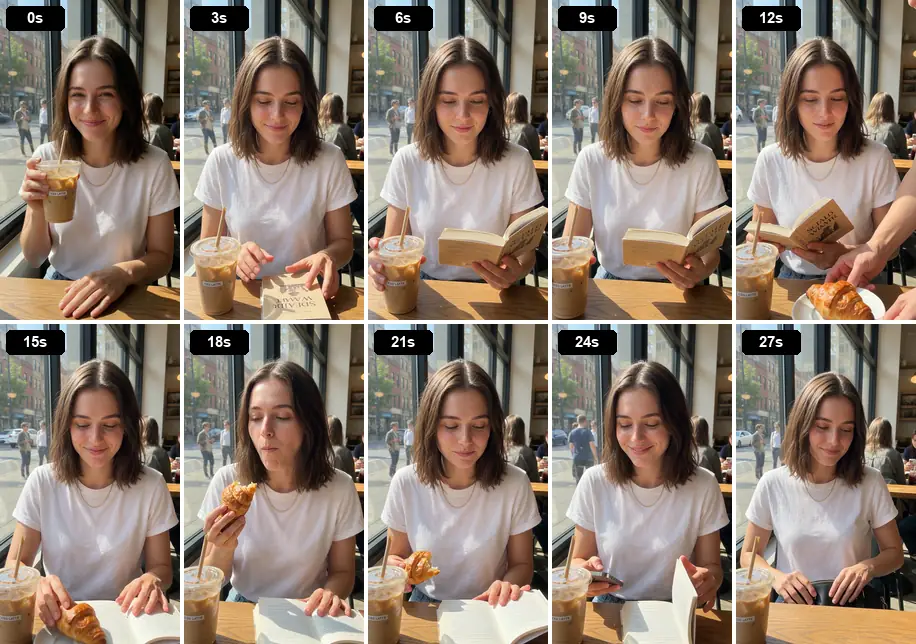
“She reads a paperback and sips her iced latte. A waiter sets a croissant on her table; she thanks him and takes a bite. Her phone buzzes, she reads the message and laughs, then she packs up her book and walks out of the frame. One continuous take while the camera slowly drifts closer.”

30 s · 720p · sound on · 150 credits per run

Run 1 · 10/12
Play with sound
Run 2 · 9/12
Play with sound
  • Her face stayed the same for the full 30 seconds in both runs.
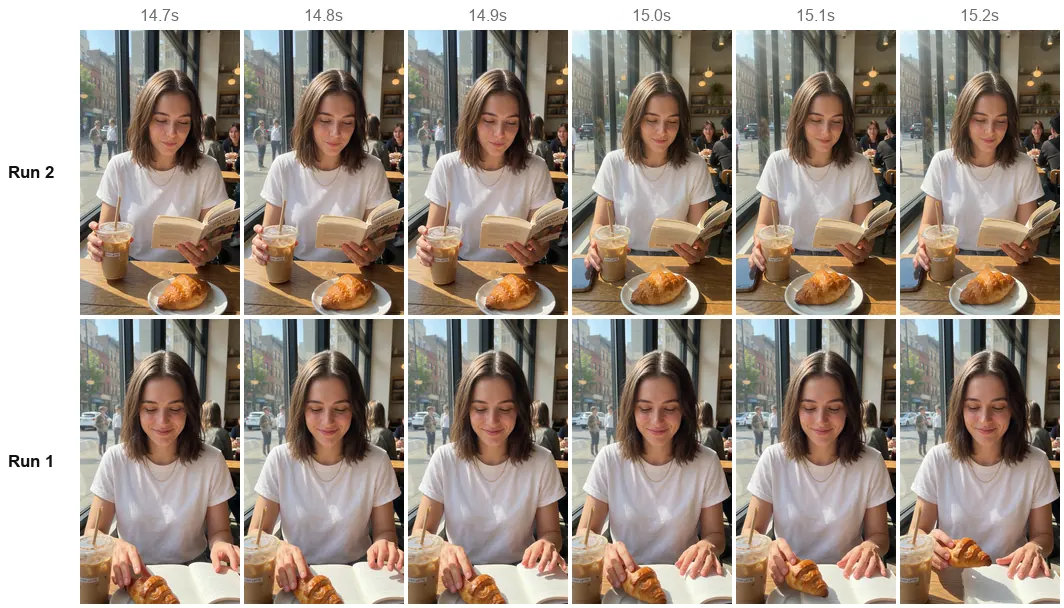
  • Run 2 cut to a new camera angle at exactly 15.0 s and skipped the bite.
  • Run 1 remained one take, but a phone appeared on the table from nowhere at 21.5 s.
  • Both runs turned “she thanks him” into a spoken “Thank you”, timed to her looking up.
Frames from 14.7 to 15.2 seconds: run 2 jumps to a new angle at 15.0 s, run 1 continues smoothly
14.7–15.2 s. Run 2 jumps to a new angle at 15.0 s: new background, new light, and a phone on the table. Run 1 continues.
  • Run 1 · 10/12 · 3 min 43 s · −19.0 LUFS
    Reads and sips (0–10 s); a waiter's hand sets down a croissant (11–12 s); she looks up and says “Thank you” (13.1 s); bites (16–18 s); a phone appears on the table from nowhere and buzzes (21.5 s); reads it and laughs (23–25 s); packs up and walks out (26–29 s). One continuous take, but the camera barely moves closer.
  • Run 2 · 9/12 · 4 min 2 s · −10.0 LUFS
    Reads and sips; the croissant arrives at 5 s, and she looks up to thank him at 7 s. At exactly 15.0 s, the clip cuts to a new camera angle, despite “one continuous take”. She never takes a bite. Reads the phone (18–20 s), laughs, packs a tote and walks out (27–28 s).
CriterionRun 1Run 2
Prompt21
Subject22
Physics12
Camera10
Detail22
Sound22
Total10/129/12
See ten frames from every run

Mode 7

480p, 720p and 1080p

The product prompt again, with one run each at 480p and 1080p, shown beside the 720p runs above. One run per resolution, so these clips aren’t scored.

ResolutionCredits (5 s)RenderLabel sharpnessWhat we saw
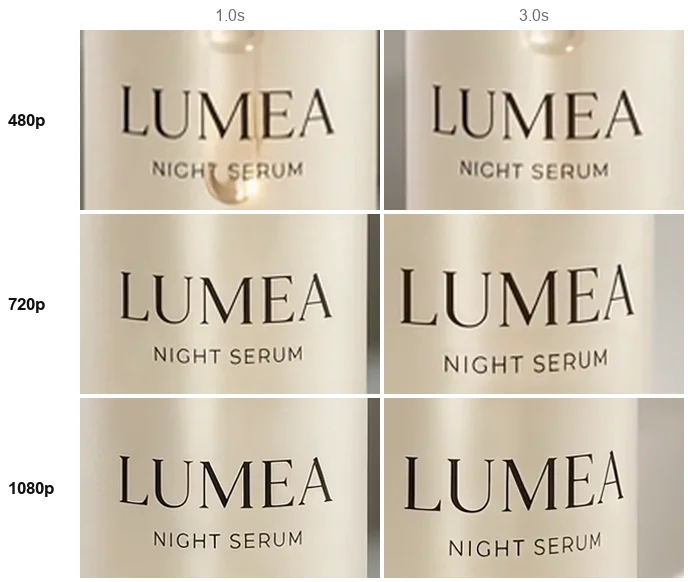
480p1597 s0.19×NIGHT appears as NICHT in several frames.
720p2560 s1.0× (baseline)Label clean in all three runs.
1080p4597 s2.3×The sharpest label in the test.
  • At 480p, NIGHT appeared as NICHT in several frames.
  • At 1080p, the label was 2.3 times sharper than at 720p (edge sharpness at the same display size), while 480p was only a fifth as sharp.
  • The 480p and 1080p runs both took 97 seconds, so one run each can't show which is faster.
The LUMEA NIGHT SERUM label at 480p, 720p and 1080p; at 480p NIGHT reads as NICHT
The label at 1.0 and 3.0 s, scaled to the same size. At 480p, the G of NIGHT loses its bar.

A/B test

Does ClipRush’s prompt writer help Wan 3.0?

In our image-to-video test, ClipRush expanded the short café prompt before Wan 3.0 saw it. Here we sent the same prompt as written: starting it with “ACTION:” tells the studio the prompt is already structured, so it reaches Wan 3.0 untouched. Scores use that test's nine criteria (not the six used elsewhere on this page), 54 points per three runs.

The prompt, word for word

“ACTION: She glances out the window, then turns back to the camera, takes a sip of her iced latte through the straw, lowers the cup and waves at the camera with her free hand, smiling. Slow push-in, people walk past outside.”

10 s · 720p · sound on · 50 credits

As written · 51/54

Run 1 · 17/18
Play with sound
Run 2 · 17/18
Play with sound
Run 3 · 17/18
Play with sound

With the studio’s rewrite · 52/54 · from our image-to-video test

Run 1 · 17/18
Play with sound
Run 2 · 18/18
Play with sound
Run 3 · 17/18
Play with sound
MeasureWith the rewriteAs written
Score52 / 5451 / 54
Looks out of the window first1 of 3 runs3 of 3 runs
Push-inGradual, between 3 and 6 sNone until 8 s, then a fast close-up
Face size at the end50–56% of the frame width61–66% of the frame width
Background music0 of 3 runs2 of 3 runs
Render time75–84 s61–71 s

How the camera moved

The size of her face as a share of the frame width, every 0.2 s. A rising line means the camera is pushing in; the dip at 1–2.5 s is her turning to the window.

30%40%50%60%70%0s2s4s6s8s10s
With the rewrite (3 runs) As written (3 runs)
  • The rewrite barely changed the score, 52 versus 51 of 54, but it changed the clip.
  • Sent as written, Wan 3.0 moved the camera exactly where the prompt mentions it: last. The rewritten prompt spread the push-in across the middle of the clip.
  • Without the rewrite, two of three runs had background music; with it, none did.
  • Run 1 · 71 s · −12.1 LUFS
    Glances out the window at 0.8–2.5 s, sips at 3.5–5.0 s, lowers the cup by 6.0 s and waves at 7.0–8.2 s. The framing remains fixed until 8 s, then pushes into a close-up in the final 1.5 s. Background music nobody requested.
  • Run 2 · 69 s · −23.9 LUFS
    Same order and timing: glance at 0.8–2.5 s, sip at 3.5–5.0 s, wave at 7.0–7.8 s, then the late push-in to a close-up. Café sounds, no music.
  • Run 3 · 61 s · −8.2 LUFS
    Glance at 0.8–2.0 s, sip at 3.2–5.5 s, wave at 6.8–7.5 s, then a late push-in. The cup label smears briefly at 6.0 s. Loud background music.

Across all 31 clips

Sound

  • All 31 clips came back with soundtracks that fit their scenes.
  • Speech appeared only where the prompt requested it: the scripted dialogue and the “thanks” in the 30-second take.
  • Our audio check detected background music in 3 clips that didn't request it, and none in the dialogue clips, where we asked for no music.
  • Loudness ranged from −7 to −61 LUFS with the same settings. Plan to normalize the level after export.
Dialogue
References: 1 face
References: 3 pictures
First + last frame
Product
Dog
Lake
Text to video
30-second take
As written (A/B)
480p / 1080p
LUFS
−60−50−40−30−20−10
  • −14 LUFS: where streaming apps play
  • −35 and −45 LUFS: our sound-score thresholds

Measured October 20, 2026

Speed and price

ModeClipCreditsIn dollarsAverage render
Image to video5 s · 720p 25$1.90–2.38 60 s (9 runs)
Dialogue5 s · 720p 25$1.90–2.38 56 s (3 runs)
Image to video, as written10 s · 720p 50$3.80–4.75 67 s (3 runs)
Text to video5 s · 720p 25$1.90–2.38 71 s (3 runs)
Reference images, 1 face5 s · 720p 25$1.90–2.38 82 s (3 runs)
Reference images, 3 pictures5 s · 720p 25$1.90–2.38 1 min 50 s (3 runs)
First + last frame5 s · 720p 25$1.90–2.38 68 s (3 runs)
30-second take30 s · 720p 150$11.40–14.25 3 min 53 s (2 runs)
480p5 s 15$1.14–1.43 97 s (1 run)
1080p5 s 45$3.42–4.28 97 s (1 run)

Dollar ranges use ClipRush credit packs, from $19 for 200 credits to $380 for 5,000. Render time runs from pressing Generate to the finished file, so it includes the queue.

From what we saw

Prompt tips for Wan 3.0

Script dialogue in quotes

Both lines came out word for word in 3 of 3 runs, spoken by the right person. Add “No background music” if you don't want any: it listened.

Put the camera move where you want it in time

As written, “Slow push-in” at the end of the prompt happened at the end of the clip in 3 of 3 runs. Give it a moment (“from the start”, “as she sips”), or keep the studio's rewrite, which spread the move across the middle.

Don't name objects you don't want in frame

“The drone glides forward” drew a drone on the water in 2 of 3 runs. Describe the shot instead: “aerial shot, the camera glides forward”.

Use a last frame for a fixed ending

Wan 3.0 matched both of our frames in 3 of 3 runs. The motion finished by 3 seconds and held for the rest, so choose a length that fits the move.

Describe the outfit when reusing a face

With a face reference, she kept the café T-shirt and necklace in every new scene. Name the new clothes if you want them.

Render small text at 1080p

At 480p, NIGHT became NICHT. At 1080p, the label was 2.3 times sharper than at 720p.

Check the 15-second mark in long takes

One of our two 30-second takes cut to a new angle at exactly 15.0 s, despite “one continuous take”.

Re-roll fast animals

A running dog changed ear shape in 2 of 3 runs. One run in three was clean.

Fine print

What this review can and can’t tell you

  • Three runs per mode, two for the 30-second take and one per extra resolution. That shows how consistent Wan 3.0 is, not its average across hundreds of clips.
  • This is Wan 3.0 as ClipRush runs it: the studio first rewrites prompts under 600 characters. Only the A/B block shows Wan 3.0 without that step.
  • Every starting image was AI-generated. Real photos, with real noise and lighting, could behave differently.
  • The scores reflect our judgment, and every point includes a timestamp so you can check it against the clips. Render times, loudness, frame matching, cut detection, label tracking and transcripts are measured.
  • Our sound score penalizes quiet tracks. A near-silent product clip may be exactly what you want if you add your own music.
  • Tested on October 20, 2026. Wan 3.0 is still new and may change.

FAQ

Questions about Wan 3.0

Wan 3.0 is the newest video model from Alibaba's Wan team. It makes video with sound from text, from a first frame (optionally with a last frame), or from reference images, in clips up to 30 seconds at 480p, 720p or 1080p. In our test, it was strongest when scripted: dialogue, exact first and last frames, and faces from reference photos.

No, not as of October 2026. No Wan 3.0 weights, code or license have been published: the official Wan-AI page on Hugging Face still tops out at Wan 2.2, the last open-weight Wan model. Wan 3.0 is available through hosted services, including ClipRush.

Alibaba listed Wan 3.0 in its release log on August 6, 2026, as an invite-only test, and API providers began offering it later that month. We tested it on October 20, 2026.

Wan 3.0 videos can be up to 30 seconds per clip. In ClipRush, you can choose 5, 8, 10, 15, 20 or 30 seconds. Our two 30-second takes rendered in about 4 minutes and cost 150 credits each; one cut to a new angle at the 15-second mark.

Yes, Wan 3.0 makes both sound and speech. All 31 of our clips came back with a soundtrack, and scripted dialogue was spoken word for word by the right character in 3 of 3 runs. It added background music on its own in 3 of 31 clips, and loudness ranged from −7 to −61 LUFS.

Yes, with reference images. From one photo, it kept the woman's face and hair in 3 of 3 new scenes (and her outfit too). With three references (a face, a product and a room), it combined all three in 3 of 3 runs.

In ClipRush, Wan 3.0 costs 3 credits per second at 480p, 5 at 720p and 9 at 1080p: 25 credits for 5 seconds at 720p and 150 for 30 seconds. Credit packs start at $19 for 200 credits, putting a 5-second 720p clip at about $1.90 to $2.40.

About a minute for a 5-second 720p clip (55–68 seconds on October 20, 2026), 1.5 to 2 minutes with reference images, and about 4 minutes for 30 seconds, from pressing Generate to the finished file.

Yes, in our side-by-side image-to-video test. Wan 3.0 scored 52 of 54 and Wan 2.7 scored 44, mainly on camera control, sharper on-screen text and sound, while rendering just as fast. In ClipRush, Wan 3.0 also adds clips longer than 15 seconds and reference images.

No, not in ClipRush: every clip costs credits (25 for 5 seconds at 720p). We couldn't confirm a free tier anywhere else.

Sources for facts we didn’t test ourselves

More tests: all engine tests · Best image-to-video AI: five engines compared

Try Wan 3.0 in ClipRush

Pick Ultra in Image to Video or Text to Video: up to 30 seconds, with sound.